Writing Tips
Polish B1 Formal Letter: What Examiners Score
Key takeaways
- Open and close a formal B1 letter with Szanowny Panie / Szanowna Pani and Z poważaniem.
- Answer every bullet. A missing point costs more than a small grammar slip.
- Keep one register from the first sentence to the signature.
- A past-paper key cannot score the letter. Your own text needs a criteria check.
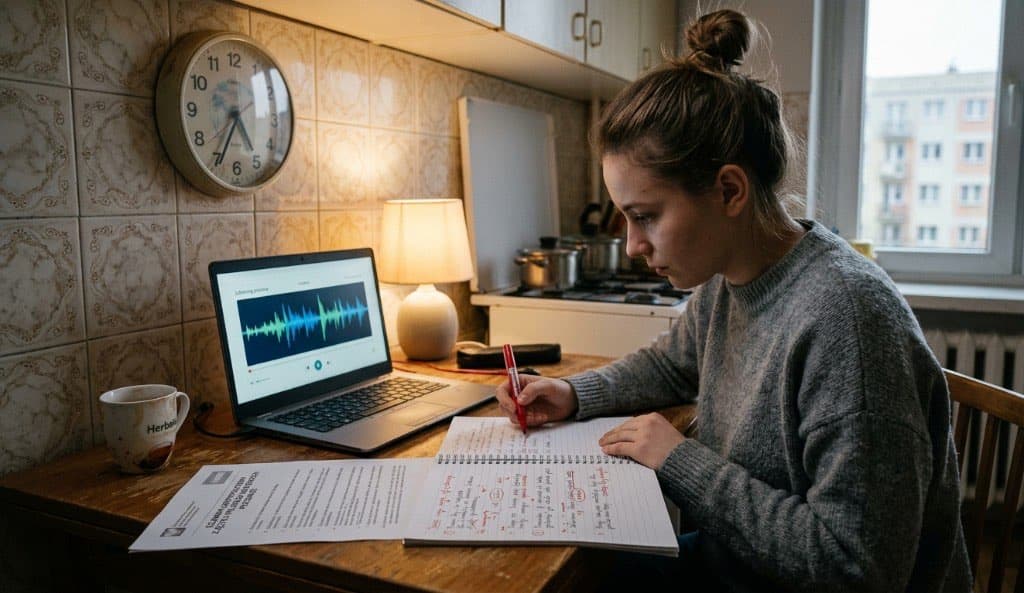
At B1 the writing paper asks for two texts. One is often a short functional form. The other is a longer letter, email, or similar text. A formal letter to an office, employer, or school is scored on whether you did the task, used the right register, and wrote enough clear Polish — not on whether a multiple-choice key matches.
Start with the addressee. Szanowny Panie / Szanowna Pani when you have a name, Szanowni Państwo when you do not. The first sentence states why you are writing: Zwracam się z prośbą o… or Uprzejmie proszę o informację w sprawie…. Do not open with Cześć or Mam pytanie.
Cover every bullet in the prompt. Missing one point costs more than a small case error. Typical points are who you are, what you need, a date or detail, and a polite close. Sign off with Z poważaniem. Keep the same register from the greeting to the signature.
Two errors show up in almost every weak letter. After dziękuję za, use the accusative: dziękuję za informację, not dziękuję za informacja. After proszę o, use the accusative as well: proszę o odpowiedź. If you mix Chcę wiedzieć with Uprzejmie proszę in the same letter, the register mark drops even when the facts are right.
An answer key from a past paper tells you which grammar option was correct. It does not read your letter. Length, layout, and whether you answered the bullets are examiner judgments. Write on paper, the way you will on exam day, then check the greeting, the bullets, and the closing before you look at grammar.
When you want a score on that page, photograph it and submit it for criteria-based feedback on task, register, and grammar. Use a free official sample for the closed tasks, and use formal-letter practice when the open task is the one you might fail.