Reviewed by the PolishReady team
Exam Day Checklist: What to Bring and How to Stay Calm
Exam day logistics matter more than people think. Bring your passport or residence card (dowód osobisty won't work for non-citizens in some centers), a blue or black pen, and your confirmation email. Arrive 30 minutes early. The exam runs about 190 minutes with short breaks between sections. Eat before you go — there's no food break. If you don't understand an instruction, you can ask the examiner to repeat it in Polish. Deep breaths between sections help more than last-minute cramming.
Key takeaways
- Bring passport or residence card, pens, and your registration confirmation email.
- Arrive at least 30 minutes early because late entry is often refused.
- The full exam takes about 190 minutes with short breaks and no meal break.
- Eat beforehand, manage time per section, and ask for instructions to be repeated in Polish.
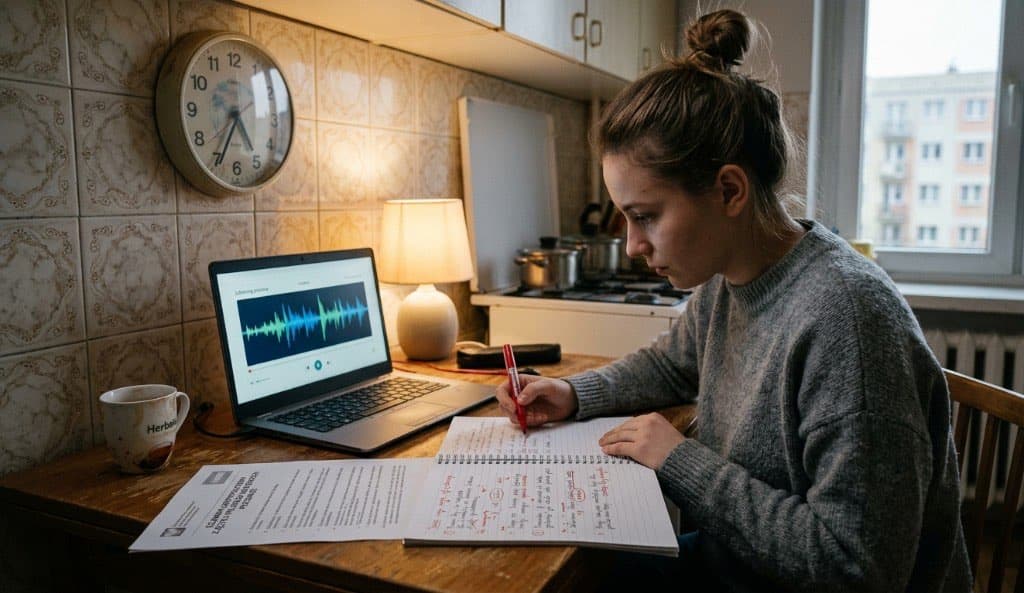
You have spent weeks or months preparing for the Polish certification exam. The worst thing that can happen now is losing marks because of logistics — forgetting a document, arriving late, or running out of energy mid-exam. This checklist covers everything you need to handle on exam day so you can focus entirely on the test itself.
Documents to bring: your passport or residence card (karta pobytu). Important: a Polish 'dowód osobisty' (ID card) may not be accepted for non-Polish citizens at some exam centers — check with your center in advance. Bring your exam confirmation email (printed or on your phone). Some centers also ask for proof of payment. Pack a blue or black pen — pencil is not accepted for the writing section. Bring a spare pen. A watch (not a phone) is helpful for time management, though most exam rooms have clocks.
Arrive at least 30 minutes before the scheduled start time. You need time to find the room, go through registration, and settle in. Most exam centers do not allow latecomers into the reading or listening sections once they have started. Arriving early also gives your nervous system time to calm down — sitting quietly in the exam room for 10 minutes before the test begins is one of the simplest and most effective stress-reduction techniques.
Eat a proper meal before the exam. The full exam lasts approximately 190 minutes (over three hours) with only short breaks between sections. There is no food break. Your brain consumes a significant amount of glucose during concentrated mental work — going in hungry means your focus drops sharply in the later sections. A balanced meal with complex carbohydrates and protein 1–2 hours before the exam is ideal. Bring water and a small snack (energy bar, fruit) for the breaks between sections.
During the exam, time management is crucial. Each section has a fixed duration, and you cannot transfer unused time from one section to another. For reading: allocate roughly equal time per task and move on if you get stuck — you can come back at the end. For listening: read the questions before the audio plays so you know what to listen for. For writing: split your time between the two tasks and leave 5–10 minutes for proofreading. For speaking: the examiner controls the timing, so just focus on communicating clearly.
If you feel stress building during the exam, use the breaks between sections strategically. Stand up, stretch, drink water, take 5–6 slow deep breaths. Do not use break time to cram or look up answers — it increases anxiety without improving performance. If you do not understand an instruction during the exam, you are allowed to ask the examiner to repeat it — in Polish. This is not penalized. After the exam, do not overanalyze your performance. Results typically arrive in 6–8 weeks. You have done the work — now let it stand.